Your 3D Printer’s Noise Might Be Telling You More Than You Think
Your 3D printer has always made noise. The whirring fans, the buzzing motors, the rhythmic shuffle of the print head moving back and forth. Most people tune it out. But researchers think that sound could actually be useful data.
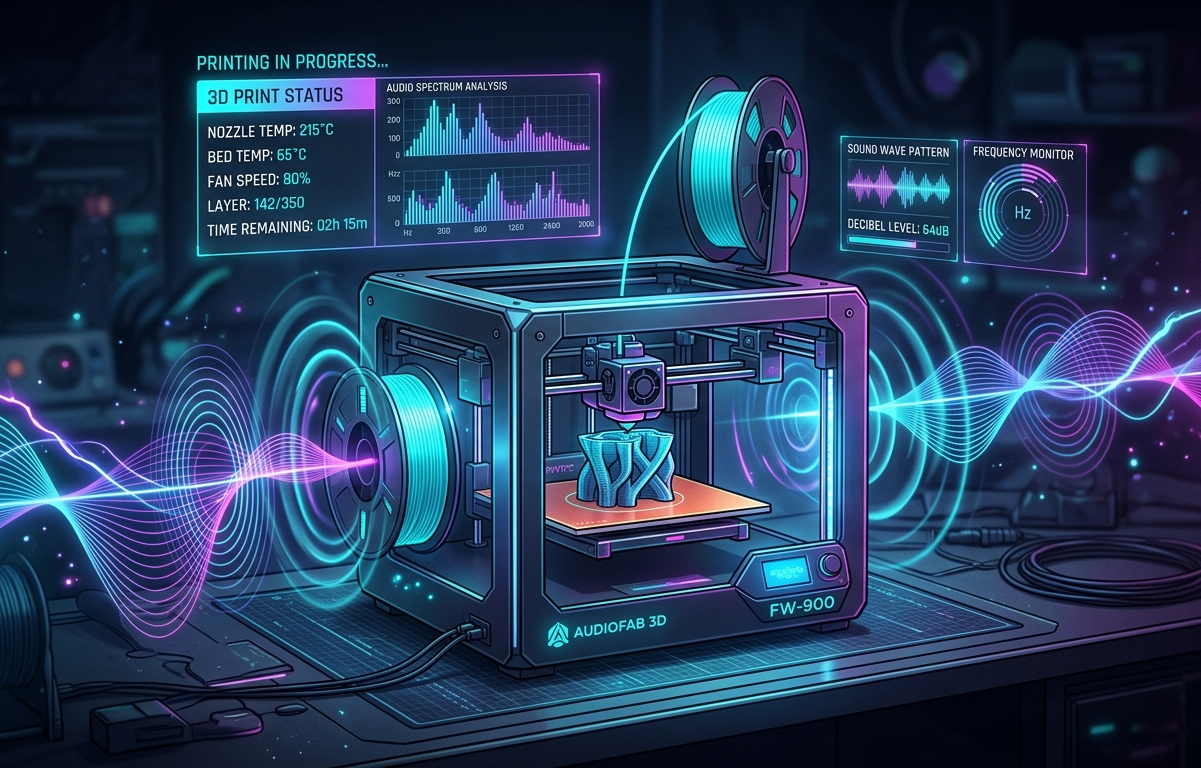
A concept gaining traction in the research space suggests that 3D printer noise could become “speed-aware,” meaning the sounds your machine makes could be used to monitor performance, catch problems early, and potentially optimize prints in real time.
Sound as a signal, not just a side effect
Every moving part in your printer creates vibration, and vibration creates sound. Motors, belts, cooling fans, they all contribute to the acoustic mix. And crucially, none of it is random.
The sounds your printer makes are directly tied to how it’s moving. Push the speed up and you get faster motor movements, more vibration, and a noticeably different sound profile. Slow it down and the whole acoustic character shifts.
That relationship between speed and sound is what researchers want to tap into.
What “speed-aware” actually means
The idea is straightforward. Instead of treating printer noise as a nuisance, treat it as a stream of information.
By analyzing the acoustic output in real time, a monitoring system could potentially:
- Detect current print speed without needing firmware access
- Spot mechanical issues like skipped steps before they ruin a print
- Adjust settings on the fly to keep quality consistent
Essentially, printers that listen to themselves and react accordingly.
Why this matters beyond the hobby space
For home users this is interesting. For industrial and remote manufacturing setups, it could be genuinely significant.
Acoustic monitoring could open the door to:
- Remote diagnostics without relying on cameras or additional sensors
- Predictive maintenance based on changes in sound patterns over time
- Quality assurance through vibration analysis alone
Vibration and acoustic data are already being studied as performance indicators in more advanced systems, so this is less “far-fetched concept” and more “logical next step.”
What it means for everyday makers
If this technology matures and makes it into consumer printers, the practical benefits are real. Quieter, better-optimized prints. Fewer failures. Less time spent manually tweaking settings.
It also puts a new spin on something makers already notice. Change your print speed and your printer sounds different. That difference might soon be the most valuable thing your machine is producing.
Source: fabbaloo.com
For more 3D printing news, click here
This page contains affiliate links and I earn a commission if you make a purchase through one of the links, at no cost to you. As an Amazon Associate I earn from qualifying purchases.