Bambu Lab Unveils the X2D With Dual Nozzles and a Heated Chamber
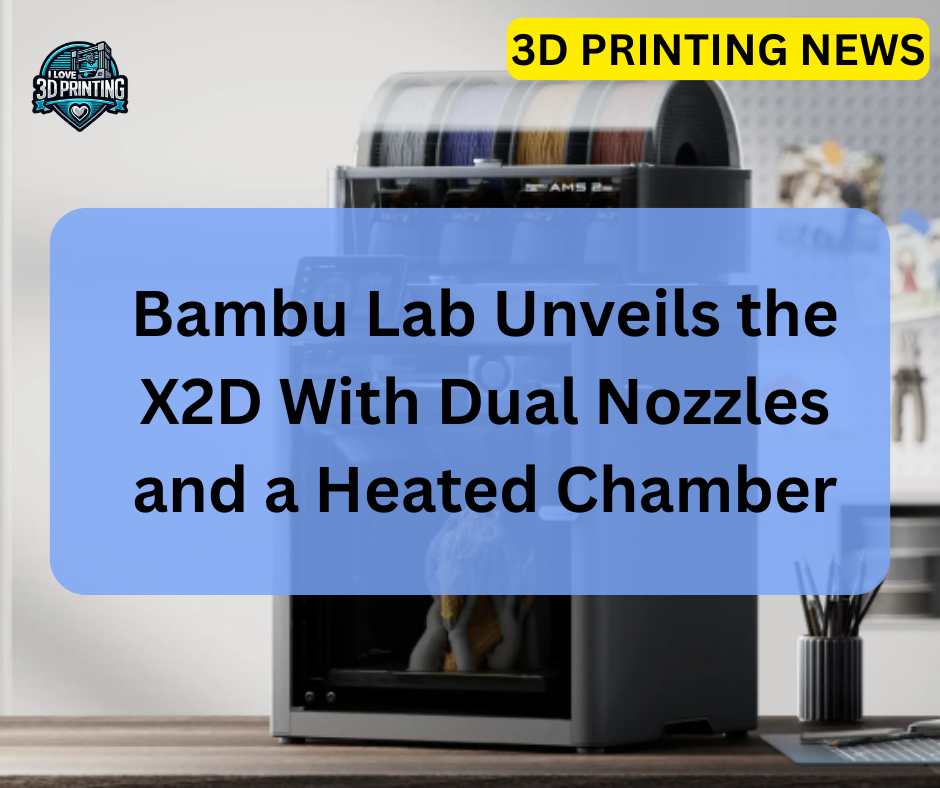
Bambu Lab has officially introduced the X2D, a new desktop FFF 3D printer that looks set to push the company further into the consumer and prosumer market. According to Fabbaloo, the machine keeps some of the familiar DNA of the older X1 line, but adds a very different feature set under the hood, including dual nozzles, active chamber heating, and a long list of sensors aimed at improving print reliability.
The standout feature here is the dual-nozzle setup. Bambu Lab is not positioning this as a machine built mainly for flashy multicolor printing. Instead, the second nozzle is designed to make soluble support material much more practical. That matters because soluble supports can make a huge difference when printing parts with difficult internal geometry, overhangs, and hidden cavities that would be a pain to clean up with normal support structures.
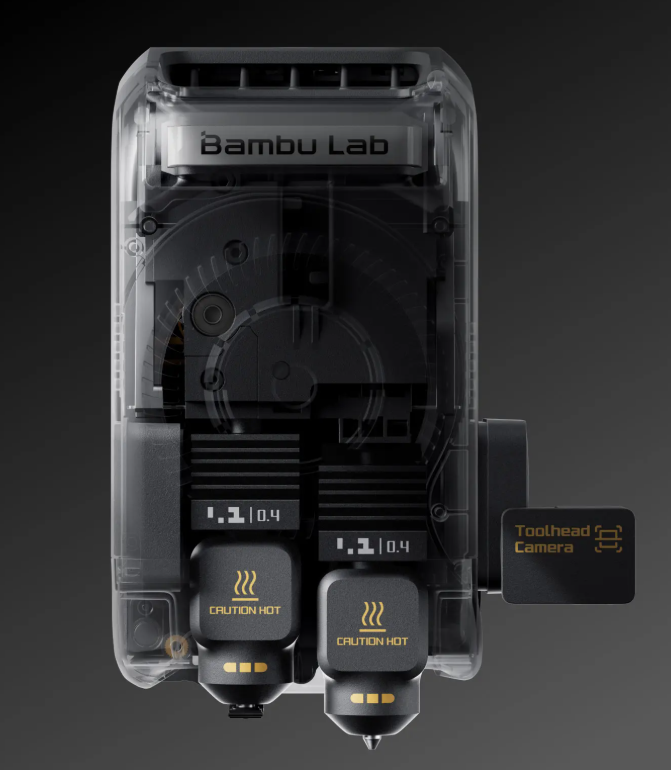
For a lot of makers, that could be one of the most useful upgrades on the machine. Complex prints often fail not because the model itself is too ambitious, but because support removal becomes messy, time-consuming, or even damaging to the final part. If the X2D handles that process well, it could open the door to more advanced prints without the usual frustration.
Another big change is the actively heated chamber, which reportedly reaches up to 65°C. That should help reduce warping by lowering the temperature difference between freshly extruded material and the surrounding air. In simple terms, it gives prints a more stable environment, which is especially important for parts where dimensional accuracy matters. Fabbaloo also notes that Bambu Lab is using a servo motor on the main extruder rather than a stepper motor, which is intended to improve extrusion smoothness and control.
Cooling has also had some attention. Instead of relying on airflow from only one side, the X2D pulls in cool air from both lower sides of the machine and exhausts it through a three-stage filter at the back. That may sound like a small engineering detail, but airflow consistency can have a real impact on print finish and quality, especially on more demanding models.
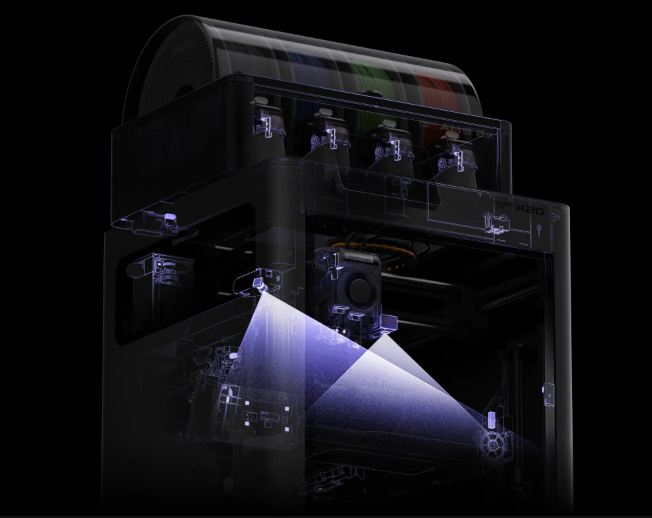
Bambu Lab is also leaning hard into automation and monitoring. The X2D includes a webcam and onboard AI that can detect certain print failures during operation. It also features Flow Dynamics Calibration, which is designed to automatically compensate for flow issues while the print is running. Fabbaloo says the machine packs in 31 sensors in total, all aimed at keeping output as consistent as possible.
What is interesting is how Bambu Lab appears to be positioning the machine. Even with features that sound very engineering-focused, the messaging seems aimed squarely at home users and prosumers rather than purely industrial buyers. Fabbaloo points to low noise levels, home-friendly emissions messaging, and filtration certifications focused on PLA and PETG as clues that Bambu Lab wants this machine living in workshops, offices, and spare rooms rather than only in professional environments.
That could be a smart move. The home 3D printing market has matured a lot, and buyers are becoming more willing to pay for convenience, cleaner results, and less trial and error. A printer that promises more reliable complex parts, easier support removal, better chamber control, and smarter monitoring could appeal to users who have outgrown entry-level machines but are not ready to jump into a full industrial setup.
Price will also make this one worth watching. Fabbaloo reports that the X2D is listed at $649 on its own, or $899 when bundled with the AMS filament system. That places it above some consumer-friendly options, but still within reach for serious hobbyists and side-hustle sellers who want more capability without entering professional machine pricing.
On paper, the X2D looks like Bambu Lab is trying to close the gap between convenience and capability. If it delivers on those promises in real-world use, it could end up being one of the more talked-about desktop 3D printer launches of the year.
For more 3D printing news, click here.
This page contains affiliate links and I earn a commission if you make a purchase through one of the links, at no cost to you. As an Amazon Associate I earn from qualifying purchases.