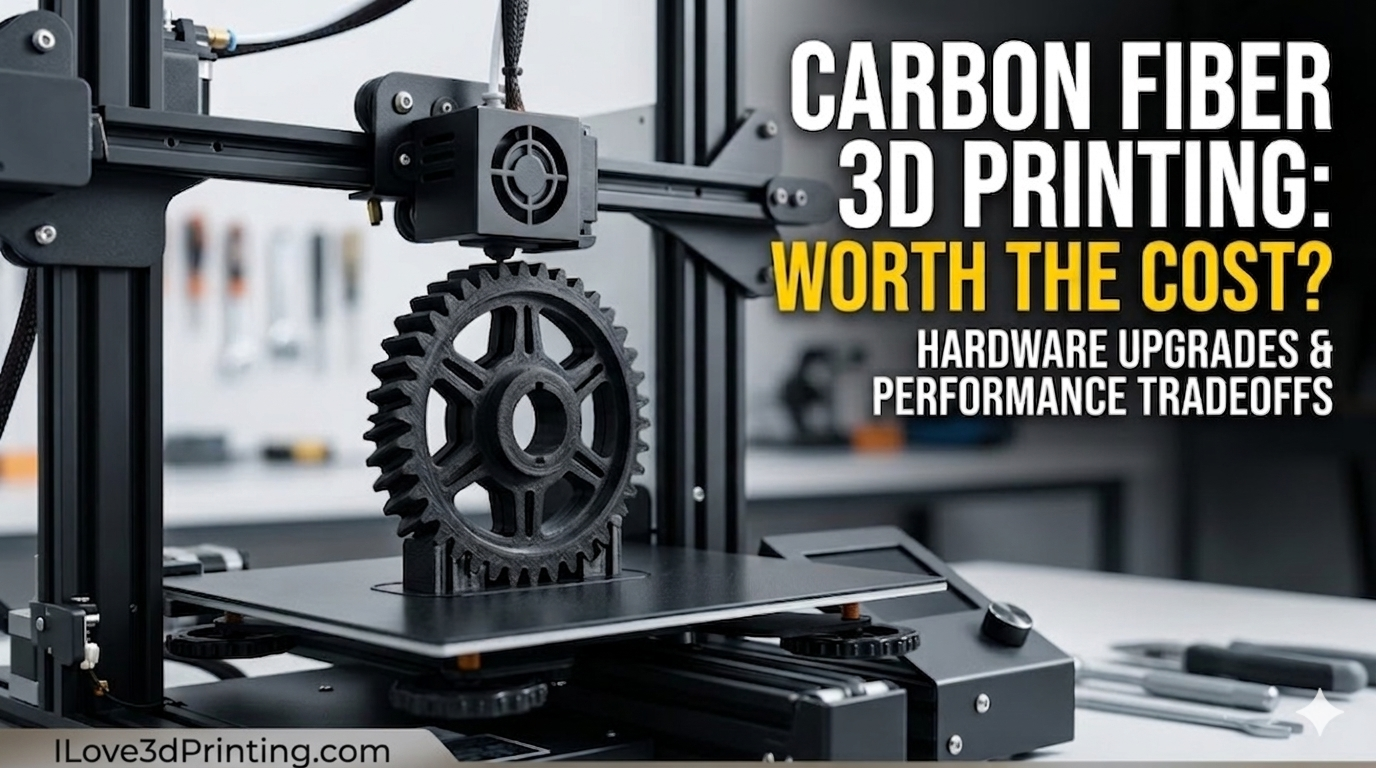
Stop Wasting Money: When You Actually Need Carbon Fiber Filament (And When You Don’t)
Carbon Fiber (CF) filament is the “all-black everything” trend of the 3D printing world. It looks professional, feels premium, and promises “industrial-grade” strength. But at $40–$100 per spool, it’s an expensive mistake if you’re just printing decorative vases.
Here is the breakdown of when to upgrade, when to skip it, and how to prep your printer for the challenge.
1. What is Carbon Fiber Filament? (The Reality Check)
Most CF filaments are not 100% carbon fiber. They are a composite material: a base polymer (like PLA, PETG, or Nylon) infused with tiny, chopped-up carbon fiber strands.
- The Benefit: The fibers act like “rebar” in concrete, increasing stiffness (rigidity) and reducing warping.
- The Trade-off: It is more brittle than the base plastic. It won’t bend—it will snap.
2. When You SHOULD Use It
You aren’t just paying for looks; you’re paying for mechanical properties. Use CF-infused filaments for:
- High-Load Brackets: If you are printing a mounting bracket for a heavy monitor or a bike rack.
- Under-the-Hood Automotive Parts: Specifically CF-Nylon, which can handle high heat and chemical exposure.
- Drones and Robotics: Where you need maximum rigidity with minimum weight to prevent “flex” during high-speed maneuvers.
- Jigs and Fixtures: In a workshop setting where tools need to be rock-solid and dimensionally accurate.
3. When It’s a Total Waste of Money
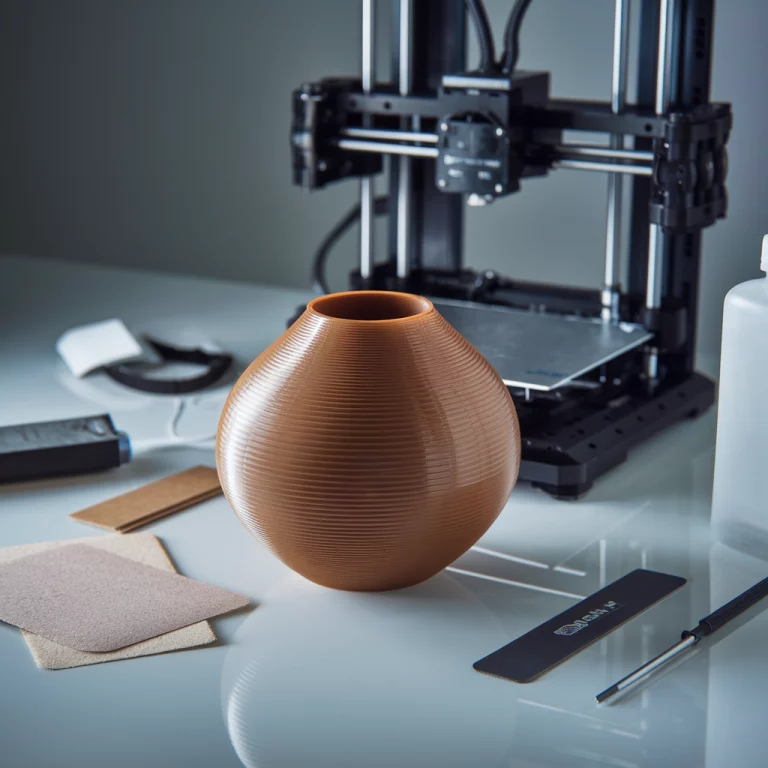
- Decorative Models: If it’s just sitting on a shelf, “Matte Black” PLA looks 95% the same for 30% of the cost.
- Impact-Resistant Toys: Because CF is stiff, it doesn’t absorb shock well. A CF-PLA toy dropped on a hard floor is more likely to shatter than standard PLA.
- Flexible Parts: If a part needs to “snap” into place, CF will likely snap off during installation.
4. Comparison Table: CF-Composites vs. Standard
| Feature | Standard PLA/PETG | CF-Infused Composite |
| Stiffness | Moderate | Excellent |
| Weight | Standard | Slightly Lighter |
| Nozzle Wear | Low (Brass is fine) | Extreme (Needs Hardened Steel) |
| Ease of Print | Easy | Moderate (Clogging Risk) |
| Visual Finish | Shiny/Matte | Premium Matte / Hides Layer Lines |
5. Essential Hardware Upgrades
You shouldn’t print Carbon Fiber on a “stock” budget printer without these two things:
- Hardened Steel Nozzle: Carbon fiber is incredibly abrasive. It acts like sandpaper. A standard brass nozzle will be ruined (the hole will physically widen) after just 200g of filament.
- Direct Drive Extruder (Recommended): While not strictly required for CF-PLA, if you move up to CF-Nylon, a direct drive setup helps manage the tricky retraction and consistency needed for composites.
6. The “Secret” Benefit: Dimensional Accuracy
One reason pros love CF filament isn’t just strength—it’s predictability. Carbon fibers shrink very little as they cool. This means your parts are less likely to warp off the bed, and holes usually print exactly the size you designed them in CAD.
Pro-Tip: If you want the “Carbon Fiber look” without the cost or the nozzle wear, look for “CF-Look” or “Galaxy Black” filaments. They use glitter or matte additives to mimic the aesthetic without the abrasive fibers.
Are you planning to use CF for a specific mechanical project, or are you looking to upgrade your printer’s hardware first?
This page contains affiliate links and I earn a commission if you make a purchase through one of the links, at no cost to you. As an Amazon Associate I earn from qualifying purchases.