AutoSmooth and the Future of Automated Metal Post-Processing
Introduction
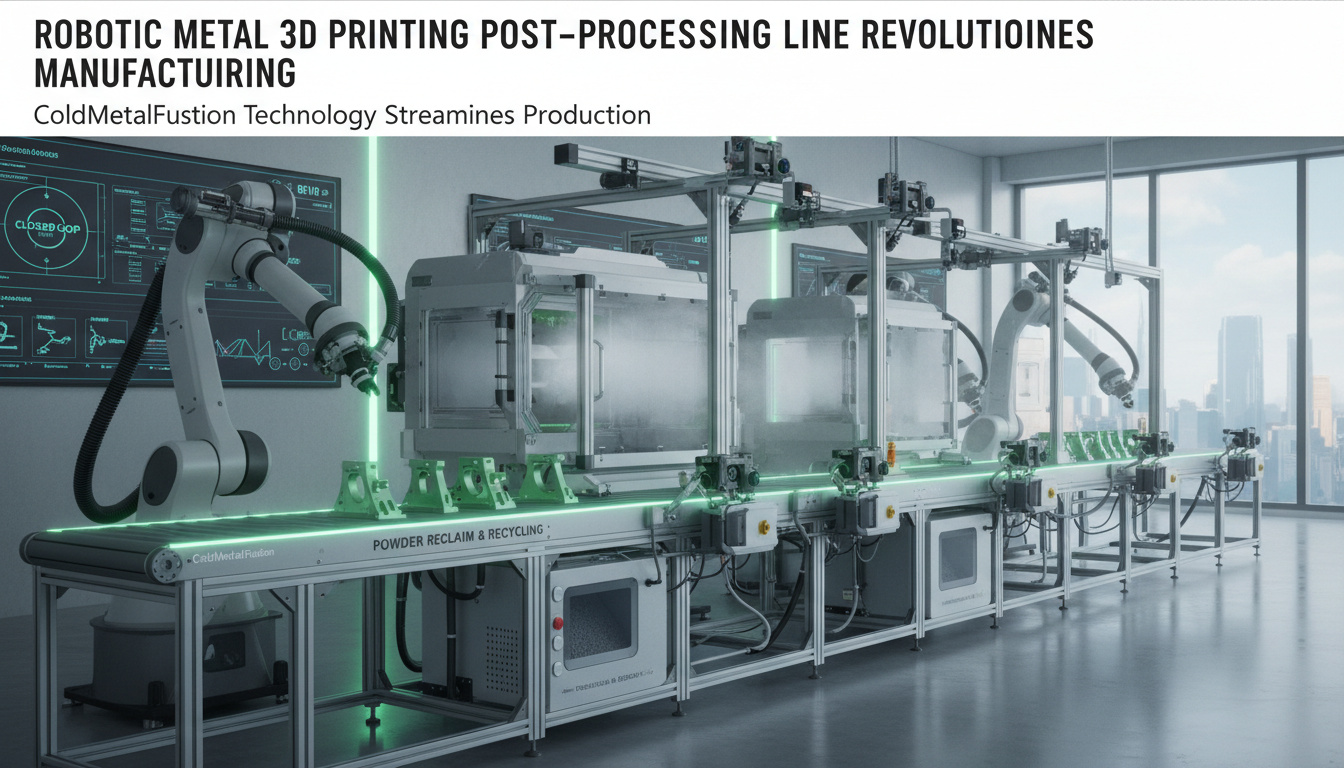
AutoSmooth is an integrated post-processing initiative for metal additive manufacturing developed by AM Solutions with Headmade Materials and NMB. Built around the ColdMetalFusion (CMF) workflow, AutoSmooth targets end-to-end automation of depowdering, surface smoothing, and feedstock recycling. Early results indicate meaningful reductions in hands-on time and cycle duration, with full lifecycle analysis planned for mid 2026.
What is AutoSmooth and ColdMetalFusion (CMF)?
CMF is a binder-based metal printing route that produces green parts which are then debound and sintered to yield dense metal components. AutoSmooth extends CMF by automating the usually labor intensive steps after printing: removal of loose powder, vapor or mechanical surface smoothing, and reclaiming of binder and powder where possible. The goal is a closed-loop workflow with 100% recyclable feedstock.
Why automation matters
Automating post-processing addresses three persistent bottlenecks in metal AM: labor costs, throughput variability, and part-to-part surface consistency. For manufacturers scaling to production volumes, reducing manual handling shortens lead times and reduces human error. AutoSmooth also makes CMF more predictable by standardizing depowdering and smoothing parameters across batches.
Sustainability and recyclable feedstock
AutoSmooth highlights recycled feedstock reuse as a core benefit. Reclaiming powder and binder can lower material costs and reduce waste streams compared with single-use powders. The planned life-cycle analysis will be critical to quantify net environmental benefit because recycling loops can introduce energy and processing costs. Early testing will also reveal limits on how many reuse cycles preserve mechanical properties.
Technical and certification challenges
Key open questions remain: how recycled material affects microstructure, fatigue life, and part tolerances; how impurities or particle-size shifts are managed; and what inspection protocols will prove parts still meet critical aerospace and medical standards. Traceability of feedstock history and robust QC sensors in the AutoSmooth chain will be essential to satisfy certifying bodies.
Implications for industries
A validated, automated CMF post-processing line could unlock higher-volume production for sectors that need metal parts with complex geometry and reasonable cost-per-part such as aerospace brackets, industrial tooling, and automotive fixtures. For defense and field-deployable manufacturing, the combination of CMF and automated finishing could shorten supply chains and enable responsive repair logistics if certification pathways are established.
Next steps for adopters
Manufacturers considering AutoSmooth or CMF should:
– Run qualification studies comparing virgin and recycled feedstock across mechanical tests relevant to their application.
– Invest in in-line inspection and material tracking to ensure traceability.
– Engage early with regulatory authorities when parts target safety-critical use cases.
– Plan pilot projects that include throughput, cost, and energy accounting to validate the sustainability claims.
Conclusion
AutoSmooth is a promising move toward industrialized, sustainable metal AM post-processing. If the recyclability claims hold and lifecycle benefits are confirmed, AutoSmooth could reduce costs and environmental impact while enabling wider production adoption of CMF. The coming lifecycle analysis and further material qualification will determine how quickly this approach becomes mainstream.
Source and original article: 3D Printing News Briefs 12-6-2025
This page contains affiliate links and I earn a commission if you make a purchase through one of the links, at no cost to you. As an Amazon Associate I earn from qualifying purchases.