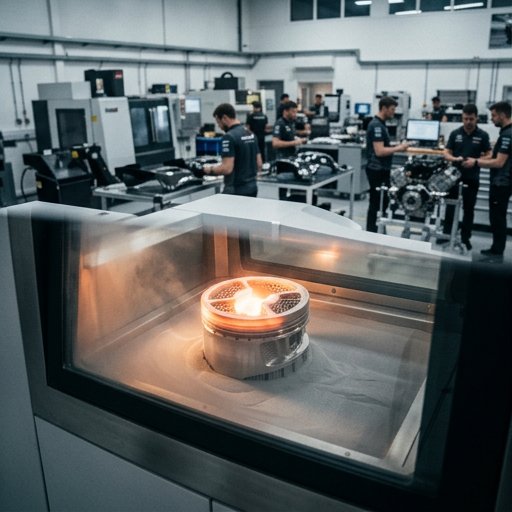
How 3D Printed Pistons Could Give F1 Engines a Hidden Power Advantage
A new technical debate is emerging in Formula 1 as engineers explore how 3D-printed pistons might allow teams to gain extra engine performance while still technically following the rules.
The controversy revolves around the compression ratio of F1 engines. For the upcoming regulations, the governing body reduced the maximum compression ratio from 18:1 to 16:1 in an attempt to limit engine complexity and development costs.
Compression ratio is important because higher compression allows the air-fuel mixture in an engine to burn more efficiently, which can translate into more power. Even a small increase can make a noticeable difference in performance on the track.
The clever piston trick
Engine designers appear to have found a clever way to stay within the letter of the rule while potentially achieving higher compression in real racing conditions.
The trick involves 3D-printed metal pistons engineered to expand in very specific ways when they heat up during operation.
When the engine is inspected by officials, measurements are taken at normal temperatures. At that point the piston geometry complies with the 16:1 limit. But once the engine is running at extremely high temperatures and speeds, the piston expands in a controlled way that slightly reduces the volume inside the cylinder.
That reduction effectively increases the compression ratio while the engine is operating.
Why 3D printing makes this possible
This kind of design would be extremely difficult to produce using traditional manufacturing methods. Additive manufacturing allows engineers to create complex internal structures, variable density materials and precisely tuned expansion behaviour inside the piston itself.
In other words, the piston can be designed to change shape in a predictable way as it heats up.
Rival teams are paying attention
Reports suggest that several engine manufacturers have raised questions with the sport’s governing body about how compression should be measured and whether operating temperature should be taken into account.
This type of innovation is nothing new in motorsport. Formula 1 has a long history of teams finding clever engineering solutions that exploit grey areas in the rulebook without technically breaking them.
A perfect example of additive manufacturing in racing
Regardless of how the rules evolve, this situation highlights how important advanced manufacturing has become in Formula 1.
3D printing already plays a major role in the sport, helping teams build lightweight parts, create complex cooling channels, and rapidly prototype new designs. In this case, it may even influence the way entire engines behave.
And as often happens in motorsport, technologies first developed for racing sometimes find their way into everyday vehicles years later.
Source: https://www.autoblog.com/news/how-3d-printed-pistons-let-f1-engines-bend-the-rules-on-compression
For more 3D printing news, click here:
https://ilove3dprinting.com/category/3d-printer-news/
This page contains affiliate links and I earn a commission if you make a purchase through one of the links, at no cost to you. As an Amazon Associate I earn from qualifying purchases.