Tiny Powerhouses: The Rise of Miniaturized 3D‑Printed Membraneless Photo‑Electrochemical Fuel Cells
Introduction
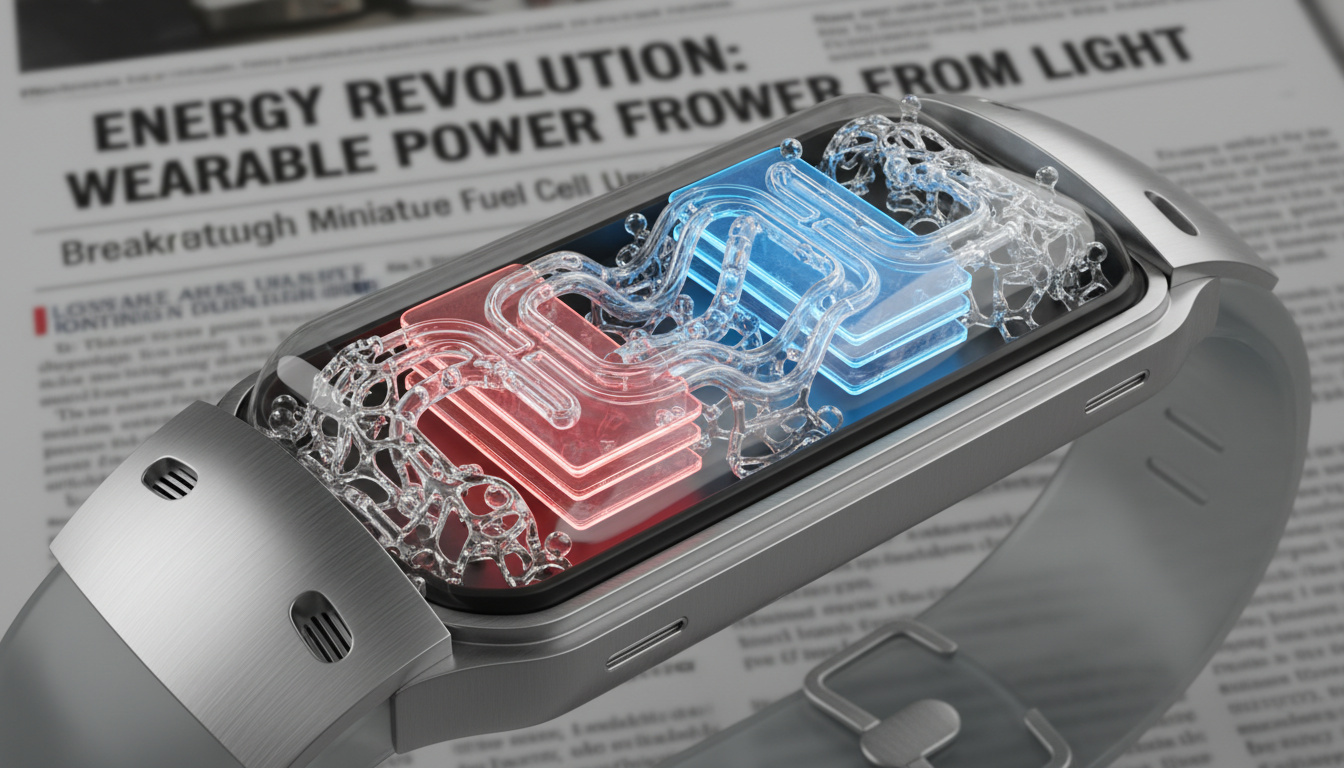
Miniaturized membraneless photo-electrochemical fuel cells represent a new class of compact energy converters that combine 3D printing, photoelectrochemistry, and clever fluid architectures to produce sustainable, small-scale power. Early demonstrations of these devices highlight how additive manufacturing can create intricate geometries at the scale needed for integrated sensors, lab-on-chip systems, and portable electronics (bioengineer.org) and point to the broader role of 3D-printed medical and energy devices in research (geneonline.com).
How they work
These fuel cells use light-activated electrodes to drive oxidation and reduction reactions without a physical membrane separating the compartments, relying instead on controlled flow, geometry, and selective catalysts to limit mixing and maintain electrochemical gradients; precision 3D printing is key to fabricating the microchannels, electrode supports, and optical paths required (bioengineer.org). Additive manufacturing techniques already used to create complex biomedical implants show that materials, porosity control, and lattice structures can be tuned for performance and integration into constrained packages (geneonline.com).
Why 3D printing matters for these devices
3D printing enables rapid iteration of channel shapes, electrode geometries, and monolithic device assemblies that would be difficult or impossible with traditional machining; this reduces development time and can improve energy density by optimizing fluid dynamics and light exposure within a single printed piece (bioengineer.org). The medical additive manufacturing field demonstrates how tailored mechanical and fluidic properties can be achieved through print strategy and material selection, reinforcing the idea that printed energy devices can be designed for application-specific constraints (geneonline.com).
Potential applications
Because of their small size and potential for integration, membraneless photo-electrochemical fuel cells could power distributed sensors, environmental monitors, wearables, and remote lab-on-chip diagnostics where battery replacement is difficult; 3D printing also opens pathways for embedding these power sources directly into casings or structural parts (bioengineer.org). Lessons from 3D-printed medical implants suggest regulatory and biocompatibility pathways for devices intended for healthcare-related monitoring, widening real-world use cases (geneonline.com).
Challenges and research directions
Key technical hurdles include improving light-to-current efficiency, controlling cross-diffusion without a membrane, selecting durable photoactive and catalytic materials compatible with printing, and scaling reliable manufacturing for low cost; addressing these will require combined advances in printable functional inks, multi-material printing, and microfluidic design optimization (bioengineer.org). Parallel work in 3D-printed biomedical devices highlights the importance of mechanical reliability and long-term stability, which will be equally critical for deployable energy cells (geneonline.com).
Outlook
Miniaturized membraneless photo-electrochemical fuel cells illustrate how additive manufacturing can unlock novel device concepts that merge structure, optics, and electrochemistry into single printed assemblies. Continued material innovation, tighter integration with system electronics, and demonstration in real-world products will determine how quickly these tiny powerhouses move from the lab into commercial and fielded applications (bioengineer.org, geneonline.com).
Original source: Revolutionary mini 3D-printed fuel cell boosts sustainability
This page contains affiliate links and I earn a commission if you make a purchase through one of the links, at no cost to you. As an Amazon Associate I earn from qualifying purchases.